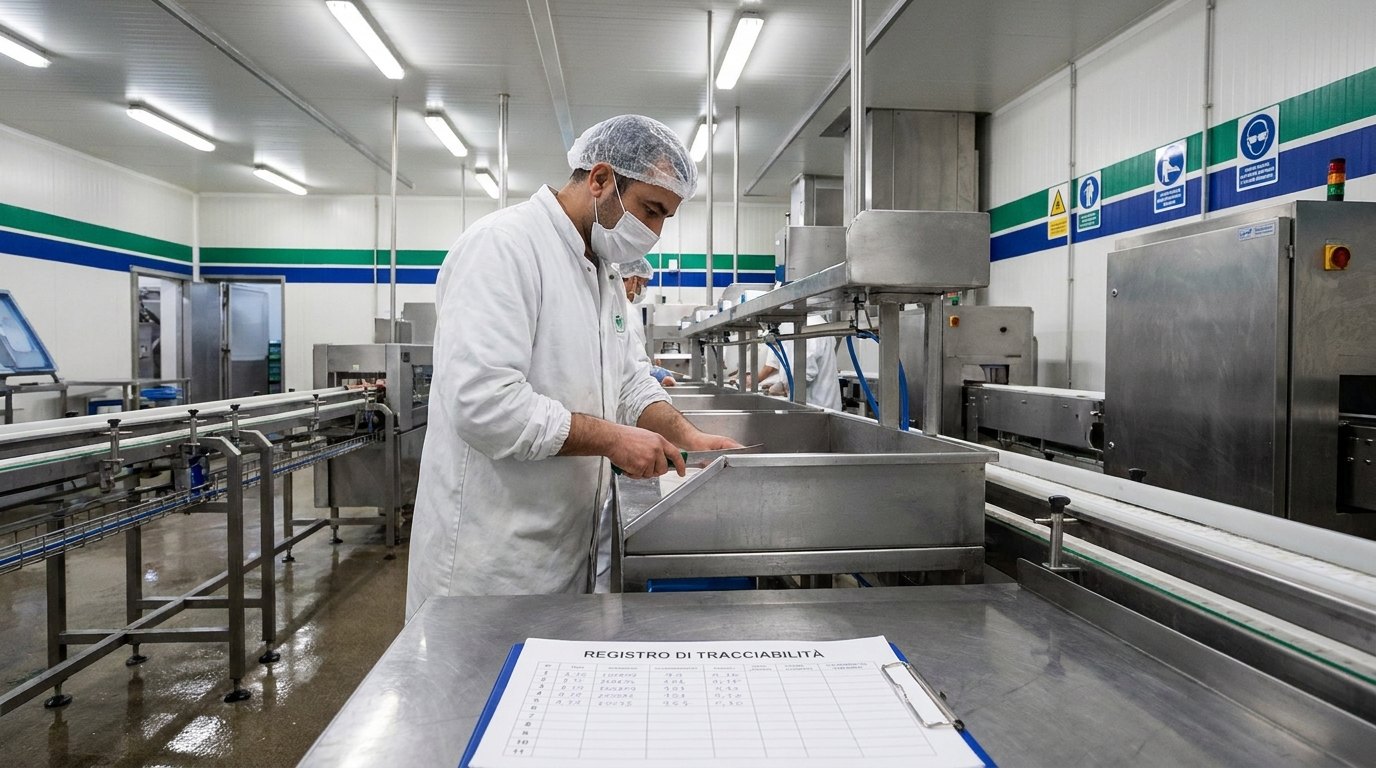
A Malaysian halal management expert is calling for all poultry abattoirs supplying Muslim consumers to employ accredited halal slaughtermen and inspectors, even where no certification is yet in place. The proposal touches a critical point for any Italian company selling poultry meat to Islamic markets: slaughter personnel is a compliance requirement, not an optional.
A Malaysian halal management expert has put forward a clear proposal: all poultry abattoirs supplying Muslim consumers should employ accredited slaughtermen and qualified halal inspectors, regardless of whether the establishment is already certified. The proposal, reported by HalalFocus, aims to strengthen regulatory oversight, improve hygiene and make the poultry supply chain more transparent.
The news comes just days after JAKIM — Malaysia's halal authority — declared that a chicken processing plant in Puchong was operating without a valid halal certificate, with stunning methods well above permitted limits. Read together, the two episodes point in a clear direction: Islamic markets are tightening controls over the poultry supply chain, and certified personnel is the first point of verification.
If your company slaughters or processes poultry destined for export to majority-Muslim countries — Malaysia, Indonesia, Saudi Arabia, the United Arab Emirates, Qatar, Singapore — the requirement for an accredited slaughterman is not a matter internal to the importing country: it is a condition that bears directly on the Italian production establishment.
International halal standards for poultry meat — from the Gulf's GSO 993 standard to the Malaysian MS 1500, through to Indonesian BPJPH requirements — explicitly state that slaughter must be performed by an adult Muslim who is trained and, in most cases, recognised by an accredited certification body. It is not sufficient for the establishment to obtain the certificate: the individual operator carrying out the zabiha must be identifiable and their credentials must be documented.
The halal certification process for a poultry slaughter establishment involves a series of documentary and operational stages that are worth understanding before initiating any application.
The Malaysian proposal is not an isolated case. The Puchong episode, the increasingly stringent checks at Gulf customs entry points, and the Indonesian tightening on beef imports that came into force in October 2026 all indicate that Islamic markets are shifting their focus from the document — the certificate — to the actual production processes. For an Italian company, this means that presenting up-to-date documentation, trained personnel and traceable procedures has become a necessary condition for maintaining market access, not merely for obtaining it in the first place.
HQC Italia is accredited to ISO/IEC 17065 and recognised in over 50 Islamic countries, including Saudi Arabia (SASO and SFDA), the United Arab Emirates (EIAC), Malaysia (JAKIM), Indonesia (BPJPH), Singapore (MUIS) and Thailand (CICOT). The certification process for poultry slaughter establishments is defined by published procedures and verifiable at every stage. A quote is free of charge and available within 24 hours.
Tell us about your product and your target markets: the quote is free and arrives within 24 hours.