News · Halal Markets
Halal certification: the two-trillion-dollar market Italy can no longer ignore
International expertise, Italian roots, leading clients. HQC Italia certifies Italian producers serving markets that demand the guarantee of quality, traceability and compliance that only a recognised certification can provide.
HQC Italia — Halal Quality Control Italia · Published in Eurocarni 8/26
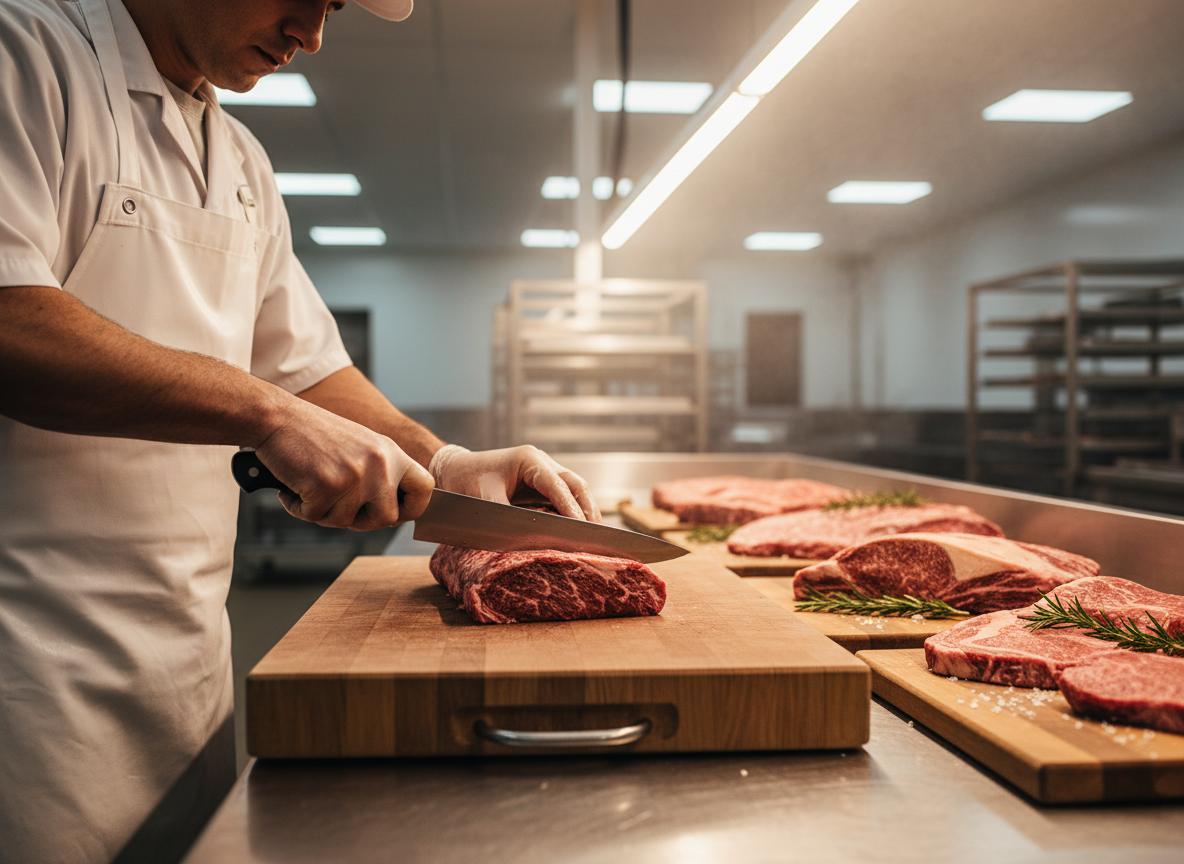
Two and a half trillion dollars. That was the value of the global Halal food market in 2024, with a growth rate of more than 10% a year. Yet for many Italian meat companies it is still an untapped opportunity.
In Arabic, Halal simply means "lawful" or "permitted". In the food context it identifies what complies with Islamic precepts: no pork or pork derivatives, no alcohol, a correct slaughter procedure with the invocation of the name of God, and no contamination with prohibited substances. But today Halal certification is much more than that: it is an integrated supply-chain quality control system covering ingredients, production processes, storage, transport and labelling.
A global phenomenon: the Halal market in numbers
This last figure is perhaps the most surprising for anyone who still sees Halal as an ethnic niche market. Certification is increasingly perceived as a byword for hygiene, traceability and production quality: universal values that attract a far wider audience than the strictly religious one.
Europe and Italy in full expansion
Europe is home to more than 53.7 million Muslims, whose food spending was worth around USD 93 billion in 2025 and, according to Mordor Intelligence projections, will reach USD 135 billion by 2030 (+7.8% CAGR). France leads the continental market with almost 19% of the European share, followed by Germany, the Netherlands and the United Kingdom.
Italy, with a Muslim community of more than 2 million people, is a fast-growing domestic market where demand for certified products is still largely unmet. The national picture is mixed:
- Those who have already understood. Gruppo Cremonini, F.lli Beretta, Siciliani SpA, Barilla Group, Gruppo Colussi and Illy Caffè already operate in the segment with Halal-certified lines.
- Those who are waiting. The vast majority of SMEs in the meat sector — the beating heart of Italy's processing industry — have not yet embarked on this route, often due to a lack of information or wariness of a market that appears complex.
Meat at the centre: a strategic sector for Italy
The meat sector has historically been the core of Halal certification. Correct ritual slaughter — with the animal facing Mecca, the invocation of the name of God and the severing of the jugular veins with a sharp blade — is the founding requirement around which the entire regulatory framework has been built.
Today meat and poultry products account for 52% of the total volume of the global Halal food market, and demand is growing steadily on every continent. For slaughterhouses, processors and cured-meat producers specialising in beef and poultry, Halal certification is a direct route into markets that would otherwise be out of reach.
The Halal market accelerated sharply in the post-Covid period. Italian companies are looking with growing interest at markets with significant purchasing power such as Qatar, Dubai, Saudi Arabia, Kuwait and Jordan. But the real potential remains the European and domestic markets, where Halal products are sought by a constantly growing population.
Anis Youssef — Manager, Halal Quality Control Italia
In this sense, exporting is also an indicator of sound business management and a growth-oriented vision: diversifying outlet markets helps companies become more resilient, especially in the face of crises like those we are currently going through.
From commercial advantage to customs requirement
Halal certification is already a customs requirement for imports in many countries: for poultry products, in at least 30 countries it is simply impossible to export without a valid certificate. The same situation is emerging for beef and for pork-free cured meats, with growing demand from the MENA region and South-East Asia.
From 18 October 2026, the certification requirement on imports will also extend to cosmetics and pharmaceutical products, categories with complex compositions in which animal derivatives may appear. To export to that market, Halal certification will become indispensable.
Indonesia is just the most striking case: the same logic applies to the Persian Gulf, Saudi Arabia, Morocco, Algeria, Turkey and Pakistan. Countries such as Indonesia, Malaysia and Saudi Arabia have built the Halal sector into their national visions and development plans.
And it is not just about exports. With more than 2 million Muslim consumers living in Italy — among the youngest and fastest-growing segments of the population — large-scale retail is gearing up to meet this demand. Companies that get ahead of the transition will enjoy a significant competitive advantage.
How the certification process works with HQC Italia
The process is designed to fit alongside the quality and management systems already in place — ISO 9001, ISO 22000, HACCP — without disrupting them.
- Preliminary review and quoteWe collect information on the company, its products, its supplier chain and its production processes, and prepare a commercial quote.
- Document and on-site auditQualified auditors verify the supply chain's compliance with Halal requirements: from raw materials to cleaning and sanitation procedures, through to storage and transport.
- Decision Committee reviewAn internal technical team reviews the audit findings and decides whether to approve or reject the certification application.
- Issue of the certificateThe Factory Halal Certificate is issued with a validity of 1 to 4 years, with a QR code for real-time verification on the official websites.
- Shipment certificatesFor each batch destined for markets with specific requirements (Indonesia, Saudi Arabia, UAE) we issue certificates in the formats required by the local authorities.
- Periodic surveillanceAnnual audits ensure that compliance is maintained over time and that the certification remains continuously valid.
Every HQC certificate precisely identifies the approved products, the validity dates and the scope of certification. The embedded QR code allows anyone — importers, customs authorities, end consumers — to verify the validity of the document in real time on the official portals. In the event of suspension or withdrawal, the code is automatically deactivated.
Sectors certified by HQC Italia
- Meat and slaughter — type A shipment certificates for slaughterhouses and type B for processed products
- Cured and sliced meats made from beef, lamb and poultry
- Fish and seafood products
- Ingredients, additives, flavourings, gelatines, stocks
- Vegetable oils and fats, condiments
- Confectionery, bakery products, ice cream
- Dairy products
- Pharmaceuticals, nutraceuticals and cosmetics (growing areas)
HQC Italia has been operating in the country since 2020-2021 and has established itself as one of the leading national players in Halal certification, combining the technical rigour and international recognitions of the HQC Group — active since 1985 and recognised in 57 countries — with genuine proximity to Italian companies: staff on the ground, communication in Italian and an understanding of the specific features of the national food supply chain.
Let's talk about your certification
Whether you want to open a new export market, meet demand from Italian large-scale retail or obtain a quality tool recognised in 57 countries: the first step is a no-obligation request for a quote.
Request a quote
Halal Quality Control Italia
Viale Giorgio Ribotta 11 — 00144 Rome, Italy
Tel. +39 338 965 2911
anis.youssef@halaloffice.com
anis.youssef@halaloffice.com
Article published in Eurocarni no. 8/26, pp. 26-31. Sources of the data cited: Research Nester (2025), Pew Research Center, Mordor Intelligence.