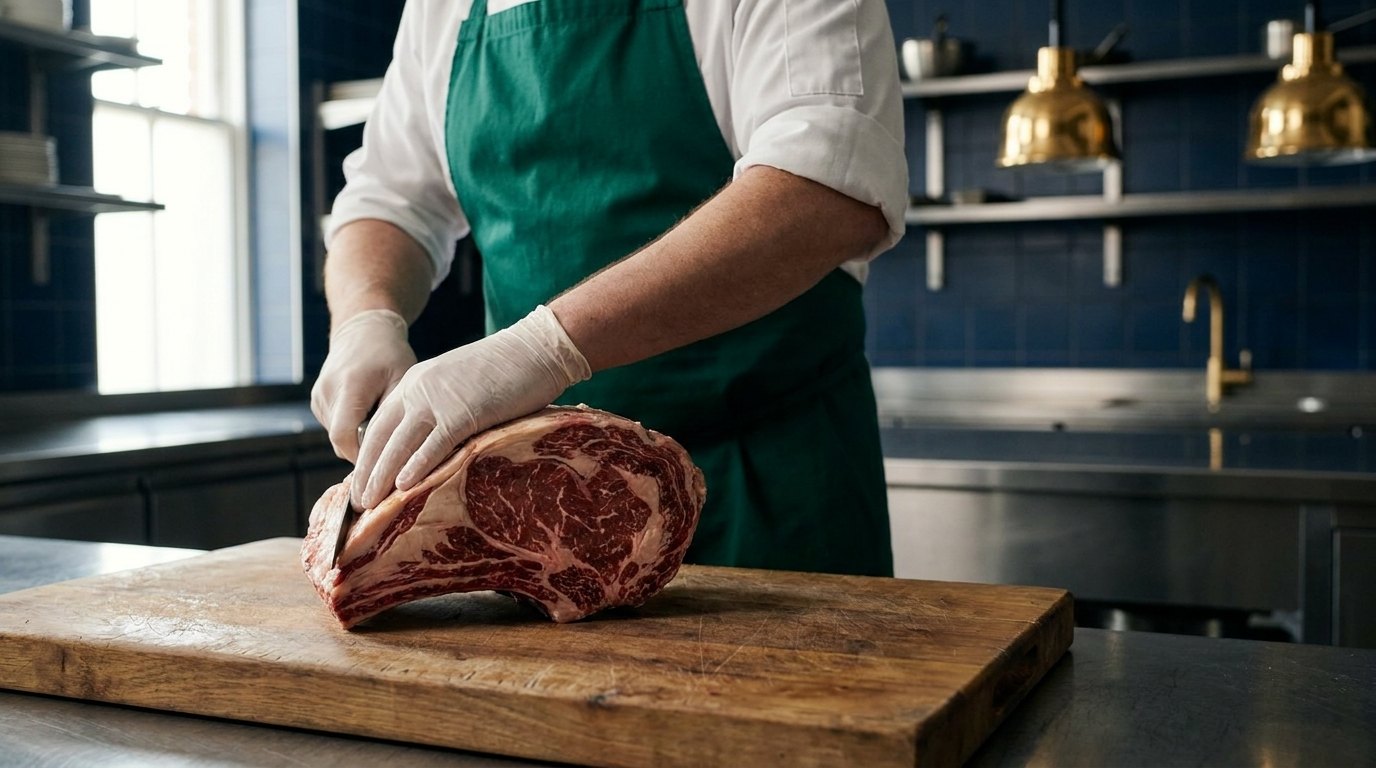
In recent months, Muslim pitmasters in Texas have started offering halal barbecue, winning over customers from all backgrounds. The phenomenon is not a local curiosity: it signals that halal demand is becoming mainstream even in non-Islamic markets. For an Italian meat producer, this shift in perspective has concrete implications.
In Fort Worth, Texas, in summer 2026, almost a hundred people were already queuing at nine o'clock on a Saturday morning to buy halal barbecue. This is reported in a Religion News Service article picked up by HalalFocus on 21 August 2026: Muslim pitmasters in Texas are reinterpreting one of the state's most deeply rooted culinary traditions, with a success that goes well beyond the local Muslim community.
The news may seem far removed from the day-to-day work of an Italian food company. It is not. It shows that halal certification is no longer a requirement reserved for exports to Muslim-majority countries: it is becoming a mark of perceived quality for non-Muslim consumers too, in Western markets with a significant and growing Muslim presence.
An Italian company processing beef, poultry or lamb — or producing cured meats from permitted meats — now faces halal demand coming from different, often simultaneous, directions:
For a producer wanting to cover even just one of these channels, halal certification is the necessary starting point. Without it, the product cannot be sold as halal in any of these contexts.
Not all halal certifications carry the same value in international markets. Each destination country recognises a specific list of authorised certification bodies. A certificate issued by a body not recognised in the destination country does not allow the goods to enter.
To get your bearings:
Choosing a certification body that already holds these recognitions reduces the number of bureaucratic steps and speeds up market access.
For an Italian food company approaching halal certification for the first time, the process is divided into a few main stages. First, a review of raw materials and ingredients: it must be verified that no component of the final product is of non-halal origin or comes into contact with prohibited substances. Second, the assessment of production processes: shared production lines, cleaning procedures and supplier management are all elements the certification body examines. Finally, the on-site audit and the issue of the certificate, which has a defined validity and requires periodic surveillance.
Complexity varies by sector: for fresh meat and slaughter, the protocol is more detailed than, for example, for a plant-based processed product. In any case, starting the process with a body recognised by the authorities of importing countries ensures that the certification is recognisable and verifiable internationally.
The global halal market is expanding. Texas halal barbecue is not an anomaly: it is the most visible manifestation of a structural trend. Italian meat companies that have already started the certification process are gaining a competitive advantage in international markets. Those still weighing it up have a real opportunity, but the window narrows as competitors — including non-European ones — consolidate their position.
The first practical step is to identify which markets you want to access and which certification is needed to do so. From there, the process is clearly defined and achievable.
Source: HalalFocus, "Texas Barbecue is Getting a Halal Makeover", 21 August 2026, based on Ulaa Kuziez and Fiona André, religionnews.com, 14 August 2026.
Tell us about your product and your target markets: the quote is free and arrives within 24 hours.