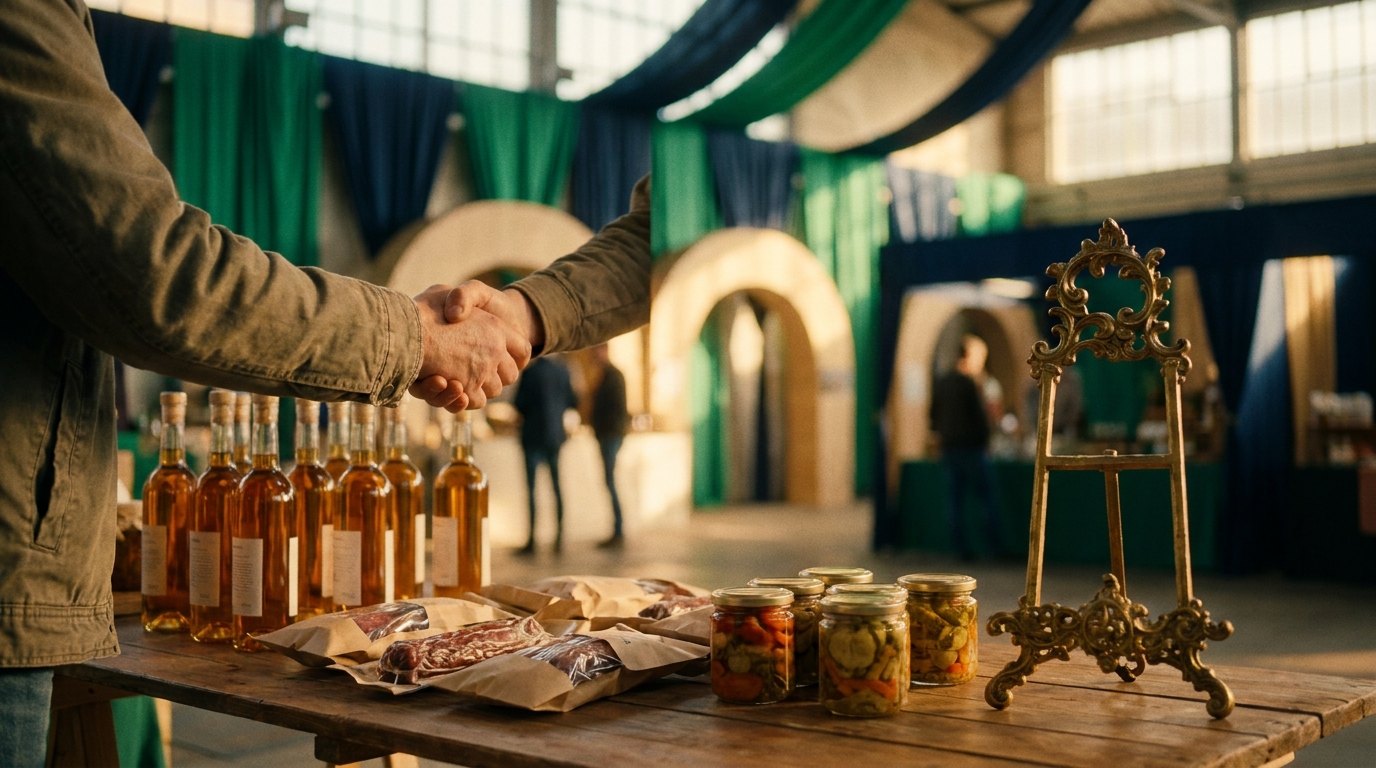
The Malaysia International Halal Showcase 2026 closed with USD 1.66 billion in sales in four days and marked the birth of the bilateral Malaysia-Indonesia Halal Council. For an Italian food company targeting South-East Asia, these two signals should be read together: the market is consolidating, the rules are being harmonised, and those who do not yet have a certification recognised by JAKIM and BPJPH risk being left out.
From 24 to 27 September 2026, Kuala Lumpur hosted the Malaysia International Halal Showcase (MIHAS), the largest Halal trade fair in the world. According to Salaam Gateway and Halal Times, the event recorded USD 1.66 billion in sales by the end of the fourth day, exceeding the initial target of USD 1.23 billion announced at the opening.
Figures aside, the most structurally significant news is political: Malaysia and Indonesia officially announced the creation of the Malaysia-Indonesia Halal Council, a bilateral body designed to reduce the regulatory barriers that currently make it complicated to sell Halal products from one country to the other — and, by extension, from any third country to both markets at the same time.
Malaysia and Indonesia are two of the most regulated and demanding Halal markets in the world. Malaysia relies on JAKIM (the Department of Islamic Development), while Indonesia relies on BPJPH (the Halal Product Assurance Agency). Until now, an Italian company wanting to sell in both countries had to navigate two separate recognition systems, with different procedures, forms and timelines.
The creation of a joint council aims precisely to simplify this dual route. In practical terms, if harmonisation moves forward — and the political level at which it was announced, with Malaysian Deputy Prime Minister Ahmad Zahid Hamidi in attendance, suggests genuine commitment — a certification recognised by both bodies could open two of Asia's largest Islamic markets at once.
For an Italian producer of processed foods, cured meats, cheeses, preserves or ingredients, this means something concrete: investing today in a certification recognised by JAKIM and BPJPH is no longer just a commercial choice, it is a strategic decision with a very clear medium-term horizon.
One detail deserves attention: the criteria used to give awards to exhibitors. Halal Times reports that MIHAS 2026 recognised 13 companies, shifting the focus of evaluation from product quality towards digital transformation and traceability capability. This is not a curiosity: major South-East Asian buyers are starting to select suppliers also on the basis of their documentation and verification infrastructure.
For an Italian company, this translates into a practical requirement: having a Halal certificate is not enough. You must be able to demonstrate — quickly, verifiably and in a digitally accessible way — that every production batch meets the requirements, that the supply chain is traced and that the certification body is recognised in the destination market.
In light of what happened at MIHAS 2026, an Italian food company looking at Malaysia and Indonesia should check three aspects as a priority:
MIHAS 2026 was not just a trade fair: it was a moment of international Halal governance. In addition to the bilateral Malaysia-Indonesia Council, during the World Halal Business Conference Malaysia put forward the proposal for an ASEAN Halal Council involving all the countries of the regional bloc. Should this proposal materialise, the scope of harmonisation would widen further, making a regionally recognised certification even more strategic.
For an Italian company, the message is straightforward: South-East Asia is building an increasingly solid and selective Halal infrastructure. Those who enter now, with a recognised certification and documentation in order, position themselves before the barriers rise further.
HQC Italia — the first Halal certification body in Europe since 1983, accredited to ISO/IEC 17065 and recognised by JAKIM (Malaysia), BPJPH (Indonesia), MUIS (Singapore) and the main Gulf bodies — provides a free quote within 24 hours. If you are considering entering the Malaysian or Indonesian market, or would like information on the requirements that apply, now is the right time to get in touch.
Source: Salaam Gateway, 29 September 2026; Halal Times, 25 September 2026.
Tell us about your product and your target markets: the quote is free and arrives within 24 hours.